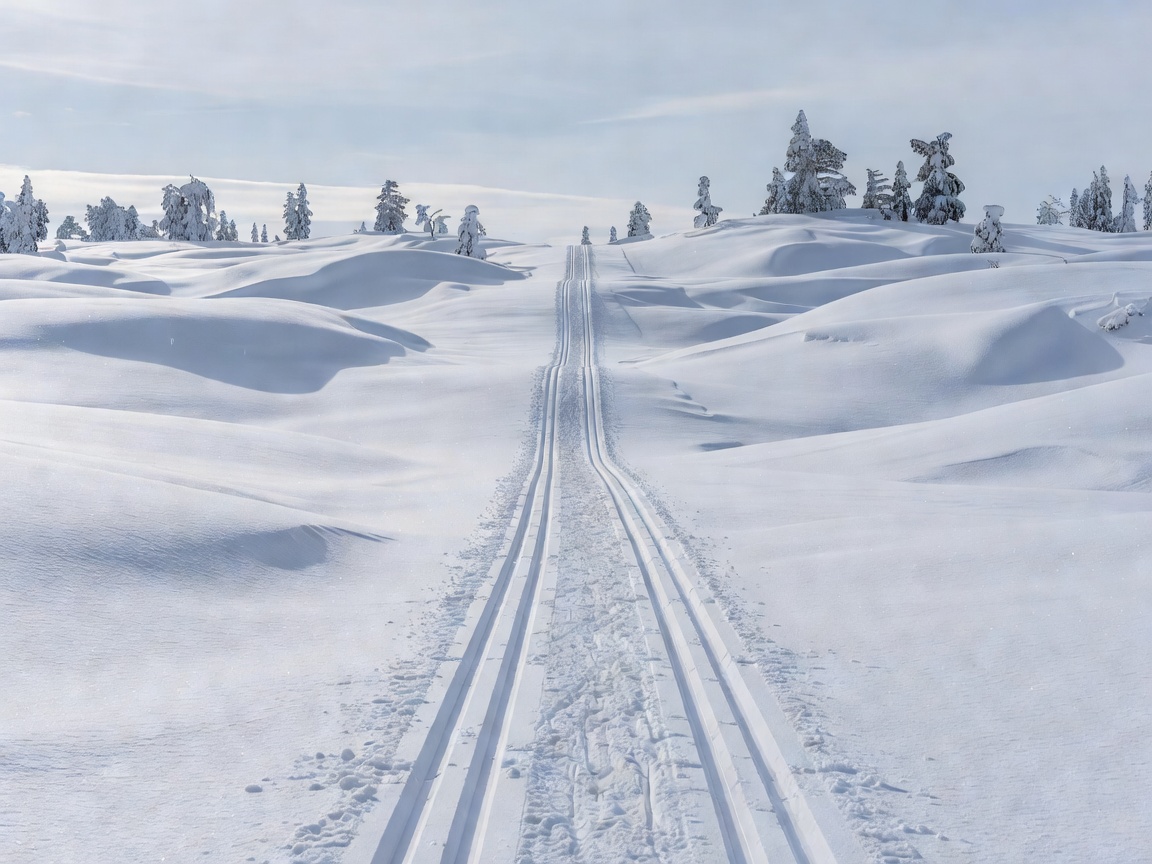
A useful training location supports the session you planned and gives you a safe way to adjust it. Start with the goal: learn basic movement, repeat a technique, build time on skis or practise climbing and descending. Then check the trail profile, grooming format, access and available recovery options. A challenging location is not automatically a more useful one.
Beginner areas and technique loops
Beginner areas should make it possible to start, stop and turn without committing to a long route. Look for gentle terrain, visible signs and a short loop close to access. A wide, even surface can help new skiers focus on balance. Avoid selecting a trail solely because it is labelled easy. Review its descents, junctions and surface, and ask the operator which sections suit learners.
Technique sessions benefit from repeatable terrain. A loop with gradual changes can let skiers practise movement at a controlled pace. For classic technique, confirm that the track format is suitable. For skating, check the width and firmness of the groomed lane. Pick a route with room to stop safely and avoid blocking other users. Coaches or qualified instructors can provide individual technique guidance.
Endurance routes and rolling ground
Endurance sessions need enough continuous skiing to match the intended time and effort. A network with connected loops can provide options without requiring a single long out-and-back route. Check distance, climbing, junctions and likely turnaround points. The plan should include a shorter variant if the group, surface or weather does not support the full session.
Rolling terrain mixes climbs, flats and descents. It can suit varied practice, but the pace and control demands may be uneven. Look at how frequently the trail rises and falls. Consider whether the group can descend safely and regroup without stopping in a busy or exposed place. A route that is enjoyable for a confident skier may not fit someone learning to control speed.
Steeper terrain and altitude
Steeper trails require the ability to manage speed, turns and changing snow. Review the profile and descriptions before setting out. Consider the skier's experience, equipment and visibility. Choose a route with conservative exit options when conditions are unfamiliar. Do not treat a map symbol as a complete description of the trail.
Altitude can affect how an individual feels during exercise, but responses vary. If travelling from a lower elevation, allow time to adjust and plan effort accordingly. Anyone with relevant health concerns should seek appropriate professional advice before training. Location elevation alone does not establish the difficulty or suitability of a session; terrain, snow and fitness all contribute.
Snow reliability and seasonal timing
Snow reliability varies by climate, elevation, exposure and season. Some areas may offer prepared snow surfaces or other forms of managed access, but services and availability differ. Check current operator updates rather than relying on historic season patterns. At the start or end of a season, conditions can vary across nearby trails. Confirm which sections are suitable and accessible.
Weather changes the training environment. Wind, temperature, snowfall, visibility and daylight affect clothing, route choice and session length. Check a reliable local forecast and update before departure. Use a route with shelter or a nearby exit if the forecast is uncertain. Be ready to shorten or cancel the session. Snow and access information is time-sensitive.
Indoor preparation and recovery support
When snow is unavailable, indoor aerobic work can help maintain general fitness. Strength and mobility work can support preparation, but exercises should match the participant's ability and be progressed sensibly. A qualified coach or health professional can tailor a program. Indoor training does not replicate every balance, temperature or surface demand of skiing.
Consider what happens after the session. Nearby shelter, changing space, water and food can make a training day easier to manage. For a multi-session visit, check equipment drying and storage options. Recovery includes enough time, appropriate clothing and a realistic training load. Avoid stacking demanding sessions simply because facilities are available.
Match the place to the plan
Write down the session objective and the features it requires. A technique day might prioritize a groomed loop, gentle grades and an easy return. An endurance day may need connected routes, clear junctions and a distance range that can be shortened. A hill-focused session calls for safe climbs and descents that match the skier's ability.
Compare locations using the same questions: What surface is groomed? How does the profile fit the goal? What is the access plan? What alternatives exist? Which facilities are confirmed? This method is more useful than a broad ranking. Local operators can clarify trail use, while current weather sources can inform the day's decisions.
Good for
- Beginner practice with short, manageable loops.
- Technique sessions on an appropriate groomed surface.
- Endurance sessions with connected route options.
- Rolling-terrain practice with suitable descent control.
- Seasonal planning around current snow and access updates.
What to know
- Define the session goal before choosing the location.
- Read the profile, not just the difficulty label.
- Check grooming, current access and weather.
- Account for altitude, exposure and recovery needs.
- Keep an easier route or indoor alternative available.